
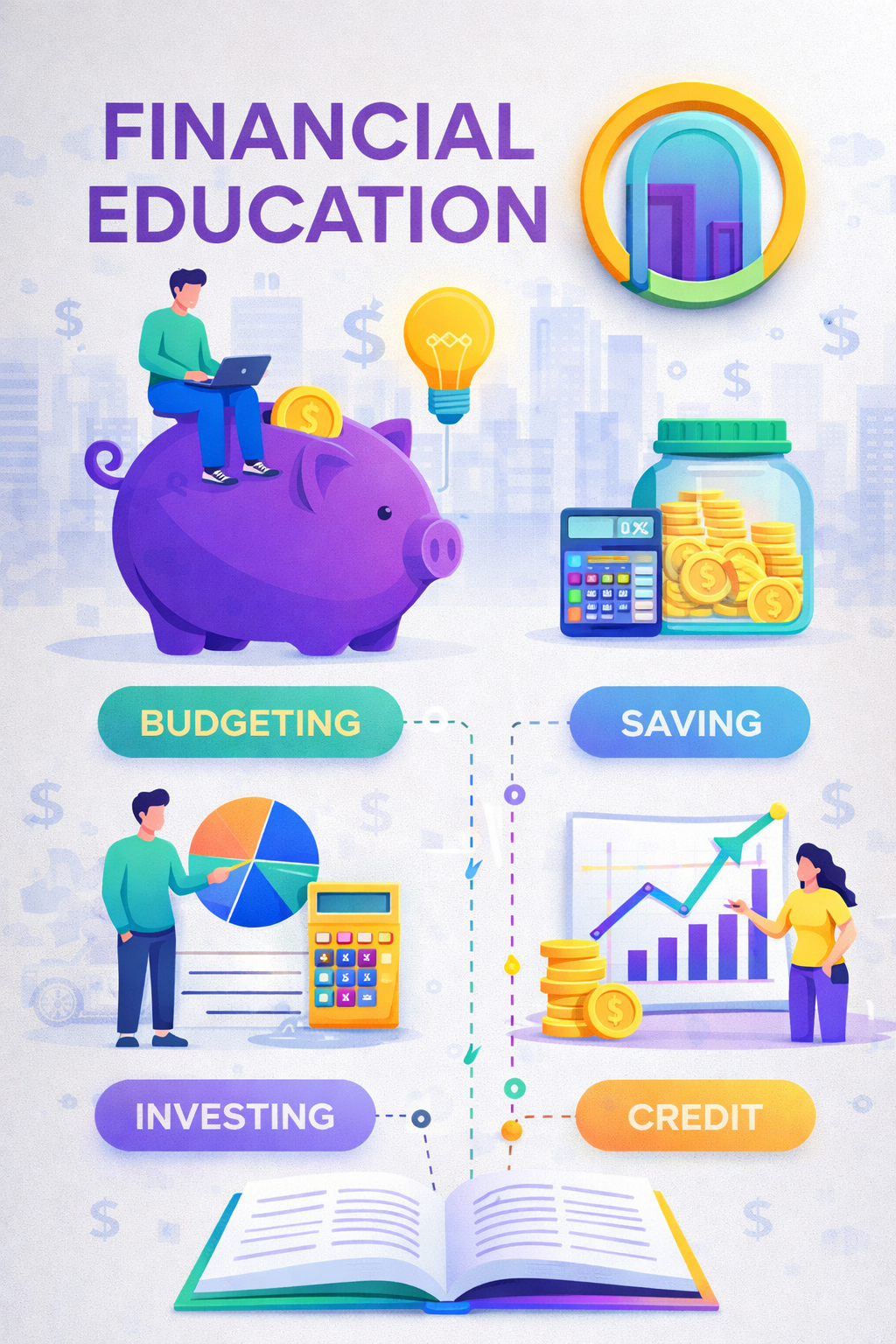
Financial Wellness Topics
Comprehensive guides and resources to help you make informed financial decisions.
Budgeting & Saving
Learn how to create and stick to a budget, build an emergency fund, and develop smart saving strategies.
Learn MoreCredit & Debt Management
Understand credit scores, manage debt effectively, and learn strategies for debt reduction.
Learn MoreInvesting Basics
Get started with investing, understand risk vs. reward, and learn about different investment vehicles.
Learn MoreHomeownership
Navigate the home buying process, understand mortgages, and learn about homeowners insurance.
Learn MoreAuto Financing
Make smart vehicle purchase decisions, understand auto loans, and learn about leasing vs. buying.
Learn MoreInsurance & Protection
Understand different types of insurance, protect your assets, and plan for unexpected events.
Learn MoreBudgeting & Saving
Essential skills for financial stability and growth.
Creating a Budget
A budget is simply a plan for how you'll spend your money each month. Follow these steps to create an effective budget:
- Calculate your total monthly income
- List all your expenses (fixed and variable)
- Categorize expenses (needs vs. wants)
- Set spending limits for each category
- Track your spending throughout the month
- Adjust your budget as needed
Smart Saving Strategies
Building savings is crucial for financial security. Try these proven strategies:
- Pay yourself first - automate savings transfers
- Build an emergency fund (3-6 months of expenses)
- Use the 50/30/20 rule (needs/wants/savings)
- Take advantage of compound interest early
- Save windfalls (tax refunds, bonuses, gifts)
- Set specific savings goals with target dates
Credit & Debt Management
Understanding and improving your credit health.
Understanding Your Credit Score
Your credit score is a three-digit number that represents your creditworthiness. The most common scoring model, FICO, ranges from 300-850:
- Exceptional: 800-850
- Very Good: 740-799
- Good: 670-739
- Fair: 580-669
- Poor: 300-579
Factors affecting your score include payment history (35%), amounts owed (30%), length of credit history (15%), new credit (10%), and credit mix (10%).
Strategies for Debt Reduction
Managing debt effectively is key to financial freedom. Consider these approaches:
- Snowball Method: Pay minimums on all debts, extra on smallest balance
- Avalanche Method: Pay minimums on all debts, extra on highest interest rate
- Debt Consolidation: Combine multiple debts into one loan
- Negotiate Terms: Contact creditors for lower rates or payment plans
- Stop Accumulating: Change spending habits to avoid new debt
Investing Basics
Building wealth through smart investment decisions.
Getting Started
Before investing, establish an emergency fund and pay off high-interest debt. Then determine your risk tolerance and investment timeline.
Diversification
Spread investments across different asset types, sectors, and geographic regions to reduce risk. Don't put all eggs in one basket.
Time Horizon
Longer investment periods typically allow for more aggressive strategies. Short-term goals may require conservative approaches.
Common Investment Types
Stocks
Ownership shares in companies. Higher potential returns but also higher risk. Best for long-term investors who can tolerate volatility.
Bonds
Loans to governments or corporations. Regular interest payments plus return of principal at maturity. Generally less volatile than stocks.
Mutual Funds
Pooled investments managed by professionals. Instant diversification across many securities. Available for various risk levels and objectives.
ETFs
Exchange-traded funds that track indexes, sectors, or commodities. Lower fees than mutual funds with similar diversification benefits.
Homeownership
Navigating the path to homeownership.
Preparing to Buy a Home
Owning a home is a significant milestone and investment. Before house hunting, ensure you're financially ready:
- Check and improve your credit score
- Save for down payment (typically 3-20%)
- Build an emergency fund for home expenses
- Research mortgage options and rates
- Get pre-approved for a mortgage
- Determine your housing budget (28/36 rule)

Mortgage Options
Understanding your mortgage choices can save thousands over the life of your loan:
- Fixed-Rate Mortgages: Interest rate stays the same for the loan term
- Adjustable-Rate Mortgages: Rate changes periodically based on market conditions
- FHA Loans: Government-backed loans with lower down payment requirements
- VA Loans: Available to veterans and active military personnel
- USDA Loans: For rural and suburban homebuyers meeting income requirements
Closing Costs & Fees
Budget for additional expenses beyond the down payment:
- Loan origination fees (0.5-1% of loan amount)
- Appraisal and inspection costs ($300-$1,000)
- Title insurance and attorney fees
- Property taxes and prepaid insurance
- Recording fees and other administrative costs
Total closing costs typically range from 2-5% of the home's purchase price.
Auto Financing
Making smart decisions when purchasing your next vehicle.
Buying vs. Leasing
Each approach has advantages depending on your situation:
Buying Advantages
- Build equity in an asset
- No mileage restrictions
- Customize as desired
- No wear-and-tear penalties
Leasing Advantages
- Lower monthly payments
- Drive newer vehicles
- Warranty coverage
- Easy upgrade cycle
Auto Loan Tips
Maximize your financing power with these strategies:
- Shop around for the best rates
- Improve credit score before applying
- Make a substantial down payment
- Compare total loan costs, not just monthly payments
- Avoid add-on products with high margins
- Consider preapproval to strengthen negotiating position
Insurance & Protection
Protecting your assets and loved ones.

Essential Insurance Coverage
Protect your financial future with appropriate insurance coverage:
- Health Insurance: Covers medical expenses and protects against catastrophic costs
- Auto Insurance: Required in most states, protects against accident liability
- Homeowners/Renters: Protects property and belongings from damage/theft
- Life Insurance: Provides financial support to beneficiaries after death
- Disability Insurance: Replaces income if unable to work due to illness/injury
- Umbrella Policy: Extra liability protection beyond other policies
Estate Planning Basics
Ensure your wishes are carried out and loved ones are protected:
- Will: Legal document specifying asset distribution
- Power of Attorney: Authorizes someone to make decisions for you
- Healthcare Directive: Specifies medical treatment preferences
- Beneficiary Designations: Keep retirement accounts and insurance up to date
- Trusts: May help avoid probate and reduce estate taxes
Identity Theft Protection
Safeguard your personal information and financial accounts:
- Monitor credit reports regularly (free annually at AnnualCreditReport.com)
- Use strong, unique passwords for online accounts
- Enable two-factor authentication when available
- Shred sensitive documents before discarding
- Be cautious with public Wi-Fi networks
- Review bank and credit card statements monthly
Free Financial Counseling
Our certified financial counselors are available to provide personalized guidance on budgeting, debt management, and financial planning.
Schedule a Session